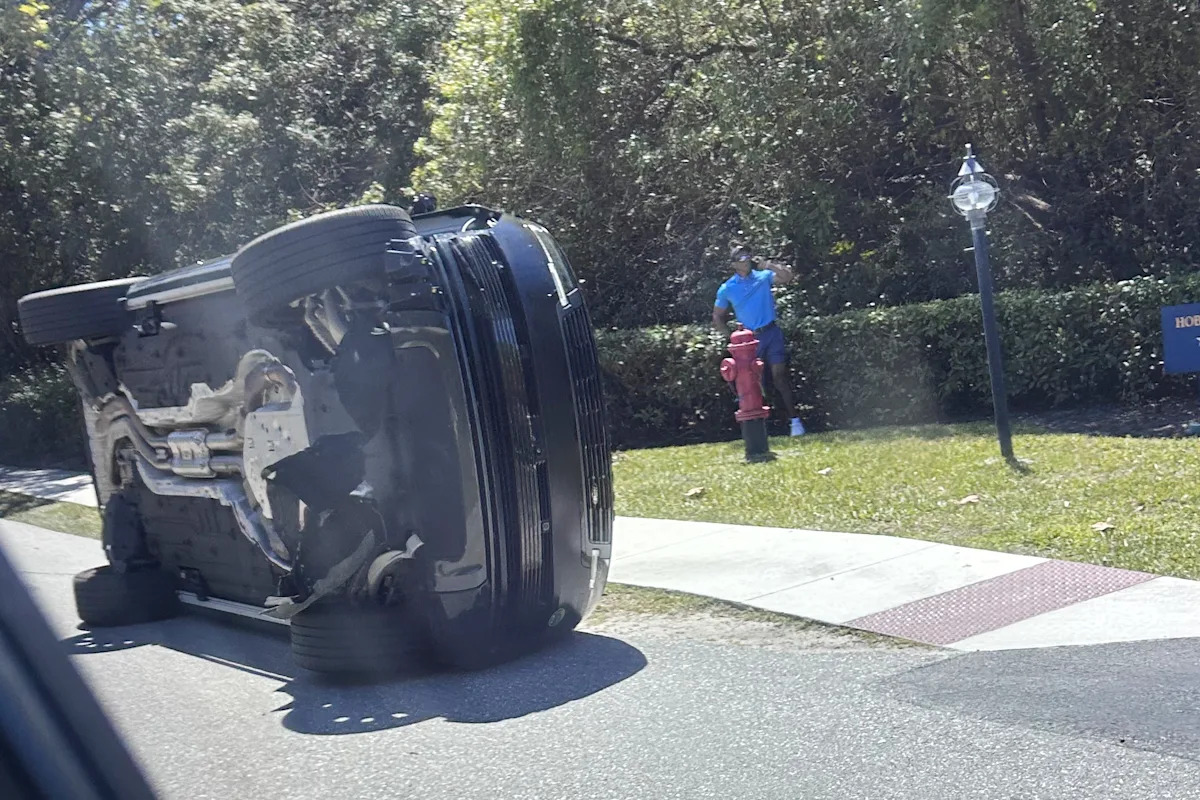
On February 23, 2021, the world held its breath as news broke: golf icon Tiger Woods had been involved in a serious single-vehicle accident. The crash, which occurred on a challenging stretch of Hawthorne Boulevard in Los Angeles County, left Woods with severe leg injuries, putting his illustrious career and even his mobility at risk. While initial investigations quickly ruled out alcohol and illicit drugs, the question lingered: what exactly caused this near-fatal incident? Beyond potential driver factors, a critical piece of the puzzle emerged, sparking widespread discussion: was Tiger Woods in an accident where the road itself, notorious for its perils, played a significant role?
This article delves into the specifics of the crash, examines the troubled history of Hawthorne Boulevard, explores the dynamics of rollover accidents, and discusses the complex nature of determining fault when both human and environmental factors are at play.
The Tragic Morning: Details of Tiger Woods' 2021 Accident
The morning of February 23, 2021, began like any other for Tiger Woods, but it took a catastrophic turn on a steep, winding section of Hawthorne Boulevard, straddling the borders of Rancho Palos Verdes and Rolling Hills Estates. Traveling northbound, Woods' Genesis SUV veered off the road, striking a median, crossing into the southbound lanes, hitting a curb and a tree, and ultimately rolling over multiple times before coming to rest. The vehicle sustained extensive damage, a testament to the sheer force of the impact.
Fortunately, despite the severity of the crash, Woods was conscious when emergency responders arrived. He was extricated from the mangled vehicle and rushed to a nearby hospital, where he underwent extensive surgery for significant injuries to his right leg, including open fractures requiring a rod, screws, and pins. The immediate aftermath confirmed no signs of alcohol or drug impairment, and weather conditions were clear. Early investigations noted that factors like excessive speed or distracted driving were being considered, alongside a thorough examination of the road itself. The search for answers began, focusing not just on the driver, but also on the environment where the accident unfolded.
Hawthorne Boulevard: A History of Danger and Concern
The stretch of Hawthorne Boulevard where Tiger Woods' crash occurred is far from an ordinary road; it has a long-standing reputation as a notorious danger zone for drivers. Local authorities and residents alike have voiced concerns about its inherent risks, making the question of "was Tiger Woods in an accident because of road defects?" particularly pertinent. Los Angeles County Sheriff Alex Villanueva publicly acknowledged the road's hazardous nature, revealing that in the period leading up to Woods' crash, there had been 13 accidents on that specific segment of the road since January of the previous year, with four resulting in injuries.
The peril of this section stems from a confluence of design characteristics. It features a steep downhill gradient, combined with curves that can catch unsuspecting or speeding drivers off guard. The temptation to accelerate on the downhill slope, coupled with the winding nature of the road, creates a recipe for disaster. Historically, this area of Hawthorne Boulevard has been tragically linked to a high number of serious, and often fatal, crashes dating back to the 1970s, including one devastating incident where a speeding truck claimed the lives of three occupants in another vehicle. Such a documented history raises serious questions about whether sufficient safety measures are in place to mitigate the known risks of this hazardous thoroughfare.
Understanding Rollover Accidents: Beyond Driver Error
Tiger Woods' 2021 incident was a single-vehicle rollover, one of the most violent and potentially fatal types of road accidents. Rollover crashes are disproportionately dangerous, accounting for approximately 30% of all vehicle occupant fatalities, despite making up a smaller percentage of overall accidents. When a vehicle rolls, its structural integrity is severely compromised, and the interior can be crushed, dramatically increasing the risk of life-threatening injuries to those inside.
While driver negligence or error is a significant contributing factor to rollovers—such as speeding, driving under the influence (though ruled out in Woods' case), or over-correcting at high speeds—it's not the only piece of the puzzle. Vehicle design plays a crucial role; vehicles with a higher center of gravity, like SUVs and trucks (including the Genesis SUV Woods was driving), are inherently more susceptible to rolling over compared to lower-slung sedans. External factors, such as road conditions, shoulder design, and the presence of fixed objects, can also initiate or exacerbate a rollover. Understanding these dynamics is essential for both prevention and for fully grasping the complexity of incidents like the one involving Woods. For more detailed insights into these dangerous incidents, read our related article: Understanding Rollover Accidents: Lessons from Tiger Woods' 2021 Crash.
Tips for Preventing Rollover Accidents:
- Maintain Safe Speeds: Adhere to speed limits, especially on curved or unfamiliar roads. Excessive speed is a primary factor in loss of control.
- Avoid Sudden Maneuvers: Abrupt steering changes, particularly at high speeds, can destabilize a vehicle with a higher center of gravity.
- Ensure Proper Tire Maintenance: Properly inflated and maintained tires are crucial for vehicle stability and traction.
- Know Your Vehicle: Be aware of your vehicle's handling characteristics, especially if driving an SUV or truck.
- Wear Your Seatbelt: Seatbelts dramatically increase survival rates in rollover incidents by keeping occupants securely inside the vehicle.
Investigating the 'At-Fault' Question: A Complex Web
Determining fault in any accident, especially one as high-profile and complex as Tiger Woods', is rarely straightforward. When considering "was Tiger Woods in an accident caused by dangerous road conditions," investigators must meticulously piece together numerous factors. They evaluate driver behavior (speed, attention, reactions), vehicle performance (tires, brakes, stability control), and environmental elements (road design, signage, maintenance, and potential defects).
In cases involving potentially dangerous road sections like Hawthorne Boulevard, authorities look for evidence of inadequate road design, poor maintenance, insufficient warning signs, or a lack of safety barriers that could have prevented or mitigated the crash. Even if a driver makes an error, a negligently designed or maintained road could still be considered a contributing factor, potentially assigning partial responsibility to the municipality or state agency responsible for the road. This concept is often referred to as comparative negligence, where multiple parties can share a percentage of the fault. Such investigations require expert analysis, accident reconstruction, and can take weeks or even months to conclude, providing a comprehensive picture rather than rushing to a single cause.
Beyond the Crash: Tiger Woods' Journey to Recovery and Past Incidents
Tiger Woods' 2021 accident was a stark reminder of the fragility of life, even for a world-class athlete. His recovery has been a long, arduous journey, marked by multiple surgeries and intensive rehabilitation, profoundly impacting his golf career and personal life. While he has made inspiring returns to the sport, the physical toll of the crash remains a constant challenge.
It's important to distinguish this 2021 California crash from a separate incident that occurred years prior. In 2017, Woods was arrested in Florida on suspicion of driving under the influence after being found asleep at the wheel of his car. Following this incident, he publicly announced his decision to seek professional treatment, stating it was "necessary in order for me to prioritize my well-being and work toward lasting recovery." This separate event highlights a different chapter in Woods' life, focused on personal health and recovery. For more on that specific incident and his subsequent actions, you can read about it here: Tiger Woods' Florida DUI Crash: Why He Sought Treatment After Arrest.
Both incidents, though distinct, underscore the unforeseen challenges even public figures face and the enduring human element in highway safety.
The question of whether Hawthorne Boulevard was 'at fault' in Tiger Woods' 2021 near-fatal crash is a complex one, without a simple answer. While driver actions are always under scrutiny, the documented history of danger on that specific stretch of road, characterized by its steep gradient and curves, cannot be overlooked. The incident serves as a critical reminder that road safety is a shared responsibility, encompassing not only vigilant driving but also the continuous evaluation and improvement of infrastructure. For all drivers, understanding the risks posed by certain road conditions and practicing defensive driving are paramount to preventing future tragedies on roads known for their peril.